As the Communist Party of China (CPC) celebrates its 105th anniversary, a central question continues to grab global attention: why has the CPC succeeded in leading China through successive, profound transformations, and why is its governance model gaining increasing resonance across the developing world?
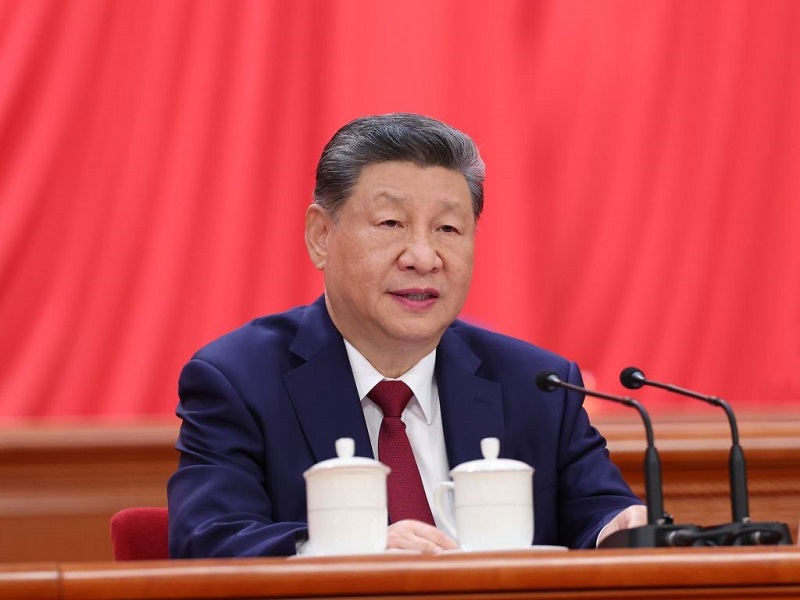
Chinese President Xi Jinping, also general secretary of the Communist Party of China (CPC) Central Committee and chairman of the Central Military Commission, addresses a gathering marking the CPC's 105th founding anniversary at the Great Hall of the People in Beijing, capital of China, July 1, 2026. (Xinhua/Yao Dawei)
In his speech at the celebration of the CPC’s 105th anniversary on July 1, 2026, General Secretary of the CPC Central Committee and Chinese President Xi Jinping offered a clear answer. The CPC, he noted, has been able to achieve historic accomplishments because it possesses unparalleled fine qualities: an unwavering commitment to seeking truth and staying on course, deep roots among the people, the courage to shoulder historic missions while maintaining strategic initiative, the ability to keep pace with development trends and remain at the forefront of the times, and a focus on constant self-improvement that keeps the Party vibrant and dynamic.
These characteristics, President Xi emphasized, form the “key code” behind “why the CPC works.”
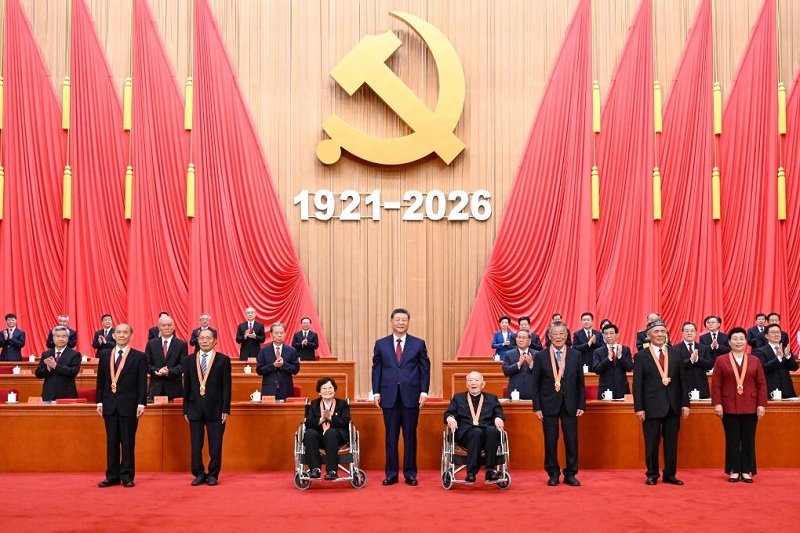
Chinese President Xi Jinping, also general secretary of the Communist Party of China (CPC) Central Committee and chairman of the Central Military Commission, confers the July 1 Medal, the Party's highest honor, on model CPC members in Beijing, capital of China, July 1, 2026.
The recently proposed Xi Jinping Thought on Party Building has become a vital lens for understanding not only China’s political development, but also the broader relationship between governance capacity, modernization, and social stability. As an important component of Xi Jinping Thought on Socialism with Chinese Characteristics for a New Era, it addresses a fundamental question facing all long-governing political parties: how to preserve vitality, legitimacy, and effectiveness amid rapid social transformation and global uncertainty.
The significance of this thought extends beyond China. At the 2026 Think Tank Forum on National Governance in Developing Countries held in late June in Beijing, scholars, political leaders, and experts from across Asia, Africa, Europe, and Latin America repeatedly returned to the same theme: the CPC’s governance experience offers valuable insights into how developing countries can pursue modernization while maintaining national independence, social cohesion, and long-term policy continuity.
Theoretical Innovation: The Compass for Development
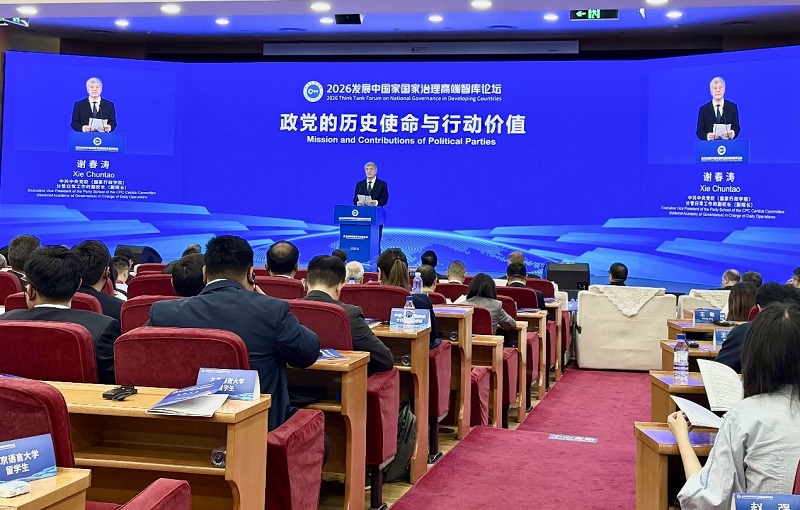
Xie Chuntao, executive vice president of the Party School of the CPC Central Committee, gives a speech at the 2026 Think Tank Forum on National Governance in Developing Countries on June 26 in Beijing.
One of the most frequently discussed dimensions was the CPC’s capacity for theoretical innovation. Xie Chuntao, executive vice president of the Party School of the CPC Central Committee, also known as the National Academy of Governance, told the forum that the Party’s success lies partly in its ability to continuously adapt Marxism to China’s realities and the needs of the times. From revolution and reform to modernization, the CPC has consistently combined strategic vision with practical problem-solving. Xi Jinping Thought on Socialism with Chinese Characteristics for a New Era, he noted, provides answers not only to “China’s questions,” but also to questions concerning global development and governance.
Chang Bo, president of China International Communications Group (CICG), echoed this, noting that theoretical innovation forms the bedrock of Party governance and provides scientific guidance for national development. “Sound theory is the soul of a political party and the key to its leadership in national politics,” Chang said. “The CPC’s glorious century-long journey has been a remarkable process of advancing theory in step with the times to continuously drive practical progress.”
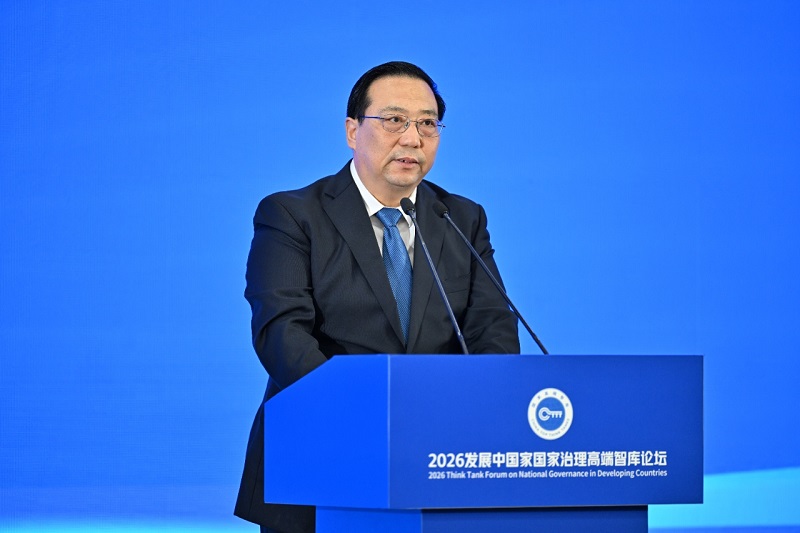
Chang Bo, president of China International Communications Group (CICG), gives a speech at the 2026 Think Tank Forum on National Governance in Developing Countries on June 26 in Beijing.
This emphasis on theory is closely connected to Party building. President Xi has repeatedly stressed that strengthening the Party ideologically is fundamental to strengthening the Party organizationally and politically. The CPC’s capacity to maintain unity around long-term goals while responding flexibly to changing realities has become one of the defining features of China’s governance system.
Foreign participants at the forum viewed this as a major source of China’s success. German sinologist Ole Doering observed that many outside China misunderstand the CPC’s ideological framework as mere formalism. In reality, he argued, the Party’s theoretical evolution reflects a coherent developmental logic that links historical continuity with institutional adaptation. According to Doering, the CPC’s governance model is not a rigid template for export, but it demonstrates how a political organization can develop long-term governance capacity while preserving social cohesion and legitimacy.
People-Centered Governance: The Ultimate Source of Legitimacy
Another major theme highlighted by both Chinese and foreign speakers at the forum was the CPC’s people-centered governance philosophy.
Yu Yunquan, vice president of CICG, said that in the great practice of continuously advancing Chinese modernization, the CPC has consistently upheld the principle of putting the people first. From poverty alleviation to common prosperity, every Party initiative is directed toward safeguarding the fundamental interests of the people, profoundly answering the core questions of “for whom we govern” and “on whom we rely.”
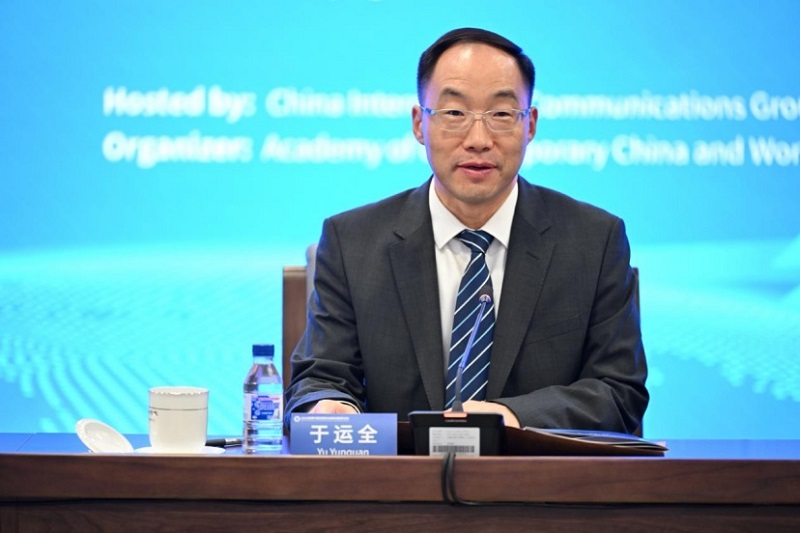
Yu Yunquan, vice president of China International Communications Group (CICG), addresses a parallel session of the 2026 Think Tank Forum on National Governance in Developing Countries on June 26 in Beijing.
President Xi has repeatedly emphasized, “The country is its people, and the people are the country,” and that the Party must always stand, think, and work alongside the people. This ethos is deeply embedded in Xi Jinping Thought on Party Building, particularly in its insistence on forging unbreakable ties between the Party and the masses.
The international public opinion data in the Global Survey: Party Governance and Modernization in China released by the Academy of Contemporary China and World Studies, provides strong evidence that this approach is gaining broad recognition globally. According to the survey conducted across 38 countries involving more than 14,000 respondents, over 96 percent positively evaluated China’s concept of whole-process people’s democracy and its contribution to improving people’s well-being and maintaining world peace. Recognition of China’s emphasis on the rights to subsistence and development as primary basic human rights reached 97 percent. The survey also found that more than 95 percent of respondents recognized the CPC’s central leadership role in advancing Chinese modernization.
These findings reflect a broader global reassessment of governance effectiveness. For many countries in the Global South, the legitimacy of governance is increasingly measured not by ideological labels, but by the ability to deliver development, social stability, infrastructure, poverty reduction, and long-term planning.
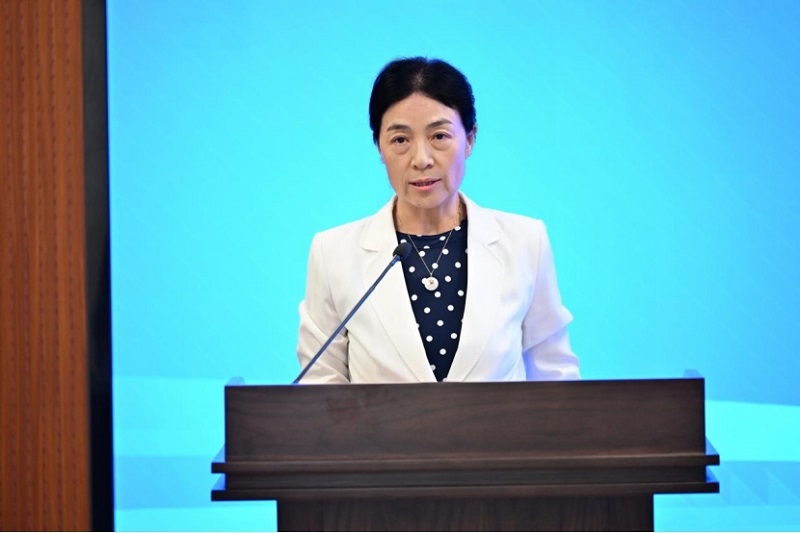
Li Yafang, president of the Academy of Contemporary China and World Studies and deputy editor-in-chief of the CICG, releases the Global Survey: Party Governance and Modernization in China at a parallel session of the 2026 Think Tank Forum on National Governance in Developing Countries on June 26 in Beijing.
This point was strongly echoed by Héctor Villagrán Cepeda, former Minister of Transportation and Public Works of Ecuador. Comparing Latin America’s fragmented party politics with China’s governance experience, he argued that many developing countries suffer from short electoral cycles, weak grassroots organization, policy discontinuity, and declining public trust. By contrast, the CPC has developed a nationwide organizational system capable of maintaining long-term strategic planning while remaining connected to local communities.
Villagrán particularly highlighted the CPC’s extensive grassroots networks and emphasis on public consultation. In his view, these mechanisms help transform political organizations from temporary electoral machines into permanent institutions serving the public.
Long-Term Vision and Institutional Strength
The ability to pursue long-term national goals was another frequently cited explanation for “why the CPC works.”
China achieved in just a few decades what took some developed countries centuries to accomplish. Behind this transformation lies the CPC’s capacity for strategic planning and policy continuity.
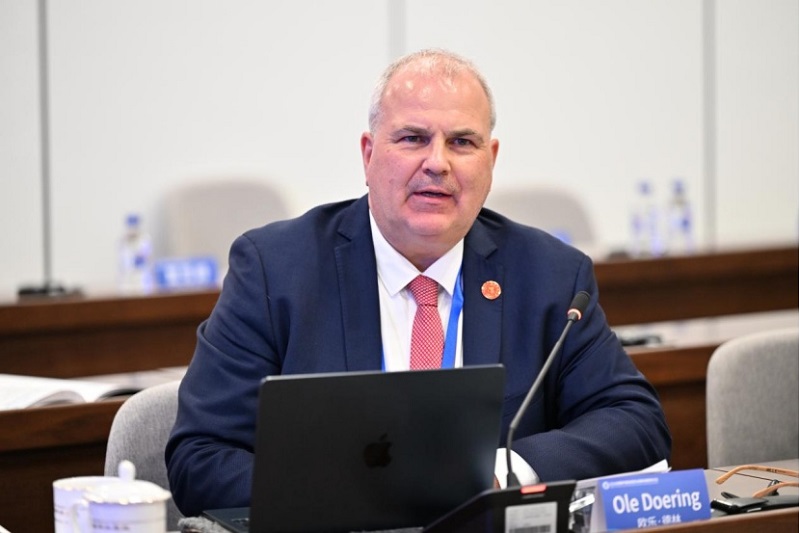
German sinologist Ole Doering speaks at a parallel session of the 2026 Think Tank Forum on National Governance in Developing Countries on June 26 in Beijing.
The international survey supports this perception. More than 88 percent of respondents identified sustained economic development, long-term planning, social stability, and cultural continuity as major reasons for the CPC’s long-term governance success.
Xie Chuntao emphasized that China’s modernization process has benefited from decades of consistent strategic planning, from the first Five-Year Plan starting in 1953 to the current “15th Five-Year Plan” period extending to 2030. This continuity allows China to pursue long-term objectives beyond short political cycles.
For many foreign observers, this governance capacity represents an important alternative to development models dominated by short-term electoral politics.
Pakistani scholar Zoon Ahmed argued that China’s governance experience has become especially relevant in a world facing leadership deficits, infrastructure gaps, and governance paralysis. She noted that more and more developing countries have come to view China not as imposing a model, but as demonstrating that modernization does not have to equal Westernization.
According to Ahmed, China’s experience shows that countries can pursue modernization based on their own national conditions, cultural traditions, and development priorities. The appeal of initiatives such as the Belt and Road Initiative lies not only in infrastructure investment, but also in offering developing countries new governance perspectives and practical solutions.
Rigorous Self-Governance: Confronting Weakness, Building Trust
This broader international relevance is also tied to the CPC’s emphasis on self-reform and strict Party governance.
President Xi has repeatedly warned that long-term governance brings risks, including corruption, bureaucratism, and disconnection from the people. For this reason, comprehensive and rigorous Party self-governance has become a defining feature of Party building in the new era.
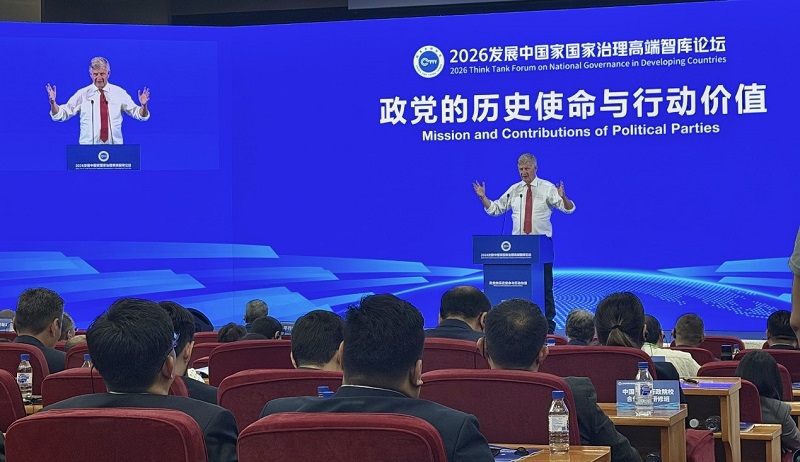
Erik Solheim, chair of the Europe-Asia Center and former UN under-secretary-general, gives a keynote speech at the 2026 Think Tank Forum on National Governance in Developing Countries on June 26 in Beijing.
Xi described Party building as a “systemic project,” stressing the importance of institutional discipline, political supervision, ideological education, and anti-corruption mechanisms. He emphasized that full, rigorous Party self-governance is an unceasing endeavor.
For many international observers, this willingness to confront internal weaknesses has strengthened the CPC’s credibility.
Clifford Oparaodu, secretary-general of Nigeria’s Independent Corrupt Practices and Other Related Offences Committee, argued that governance legitimacy ultimately depends on ethical leadership, institutional discipline, and public trust. He suggested that the CPC’s anti-corruption efforts and emphasis on moral governance have reinforced its social legitimacy and governance capacity.
Global Vision: A Shared Future Through Governance Cooperation
At the same time, the CPC’s governance experience is increasingly viewed internationally through the lens of global governance and international cooperation.
President Xi stressed in the CPC anniversary speech that China will continue promoting the building of a community with a shared future for humanity and advancing the Global Development Initiative, Global Security Initiative, Global Civilization Initiative, and Global Governance Initiative.
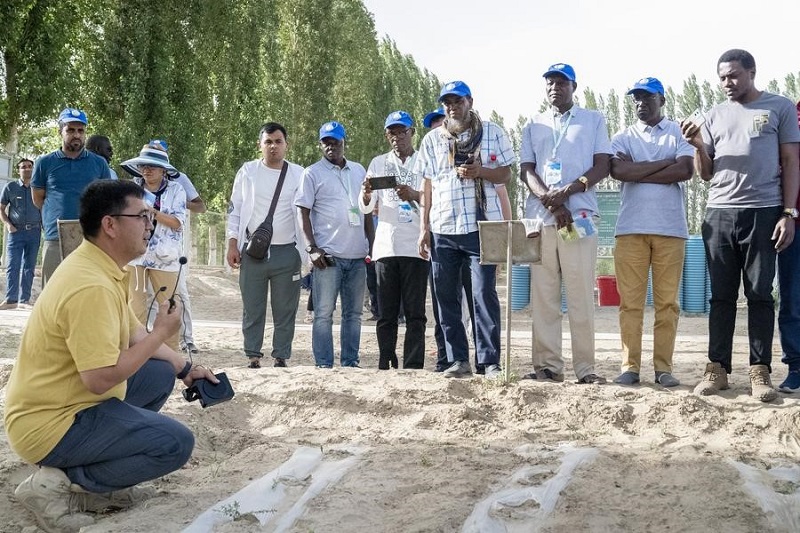
A Chinese expert introduces desert plants to people from central Asian countries at a desert research station in northwest China's Xinjiang Uygur Autonomous Region, June 13, 2023. (Xinhua/Zhou Shengbin)
Foreign participants at the forum repeatedly emphasized that China’s approach seeks not to overturn the international order, but to improve and rebalance it.
José Luis Centella, chairman of the Communist Party of Spain, described the Belt and Road Initiative as a practical platform supporting China’s broader global initiatives. In his words, these initiatives provide developing countries with concrete tools for governance modernization, development cooperation, and participation in building a more balanced international system.
Similarly, Malaysian statesman Ong Tee Keat argued that China has consistently positioned itself on the side of peace, multilateralism, and the developing world. In an era marked by geopolitical tensions and rising unilateralism, he said, China’s governance philosophy offers stability and long-term vision.
Ultimately, the growing international interest in Xi Jinping Thought on Party Building reflects a broader global search for effective governance in an age of uncertainty.
The Academy of Contemporary China and World Studies survey found that positive evaluation of China’s governance capacity reached 94.8 percent globally, while confidence in China’s economic prospects and administrative efficiency and effectiveness exceeded 95 percent. Respondents also highly rated China’s achievements in infrastructure, high-speed rail, communications technology, electric vehicles, and artificial intelligence.
Perhaps most importantly, more than 92 percent of Chinese respondents reported a strong sense of gain, happiness, and security – a reminder that governance effectiveness is ultimately measured by people’s lived experience.
The CPC’s experience does not provide a universal blueprint. China’s path emerged from its own history, culture, and national realities. But as many participants at the forum emphasized, the broader lessons of strategic planning, people-centered governance, institutional discipline, theoretical innovation, and long-term national vision carry significance far beyond China.
In a rapidly changing world, the question “why the CPC works” is no longer only a Chinese question. Increasingly, it has become part of a wider global conversation about how political systems can deliver development, stability, and hope in the 21st century.