Global zodiac design competitions help to bring cultures closer together.
The inaugural session of the China New Cultural and Creative Market and Trendy Toy Carnival (CNCTC) kicked off on May 15, 2026 in Beijing. Delegates from the Beijing Overseas Cultural Exchange Center attended the opening ceremony, sharing practical experience in cultural IP development and international cultural exchange, together with representatives from the Palace Museum and Pop Mart. The center reviewed the 12-year operation of the Global Zodiac Design Competition, exploring pathways for traditional cultural IPs to expand global influence, including cultural inheritance, cultural innovation, and international outreach. Wang Hairu, director of the Center, delivered a speech. The full text is released below.
Zodiac culture, a classic symbol of reunion, good fortune, and perseverance in Chinese heritage, also serves as a bond connecting countries across the globe. Initiated by Beijing Municipal Bureau of Culture and Tourism in 2014, the Global Zodiac Design Competition has run for 12 consecutive sessions, covering a full zodiac cycle. It has yielded remarkable outcomes and delivered solid achievements in cultural and tourism promotion. The competition has received over 40,000 entries from 28 countries, with 645 elected as outstanding works. This led to 54 international touring exhibitions held in 22 countries and regions. Starting as a design collection activity, the event has grown into an influential platform for international cultural dialogue. It acts as an important channel to tell Chinese stories, preserve traditional culture, and promote mutual learning between Chinese and foreign civilizations.
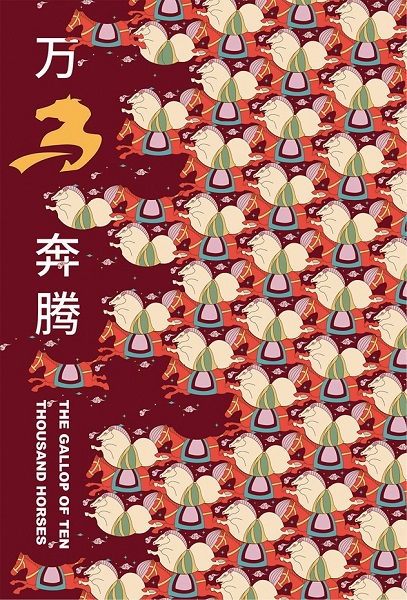
The Gallop of Ten Thousand Horses by Fang Lefei, first prize winner of the Graphic Design Unit in the 2026 Global Zodiac Design Competition (Year of the Horse).
Exploring Traditional Zodiac Culture
The competition seeks to avoid repetitive and identical styles prevailing in domestic cultural creations. It selects high-quality entries with authentic zodiac features, traditional aesthetics, and practical value, delving into historical stories and cultural significance behind classic patterns.
Traditional patterns gain new vitality in modern interpretation, while ancient cultural meanings integrate into contemporary life. The work Four Rabbits Chasing Fortune takes inspiration from the Three Hares pattern seen in Dunhuang murals. The designer has reshaped this ancient pattern with modern ideas. Four rabbits chase each other in a closed loop with heads and tails connected, forming the outline of ancient copper coins and expressing good wishes for prosperity.
Meanwhile, foreign creators have also conducted in-depth research on Chinese folk customs. Spanish designer Soraya Santamaria created Qin Qin in China, based on her personal experience of celebrating Spring Festival in the country. This work depicts scenes of setting off fireworks, making jiaozi, and watching festive lanterns. It also touches on the folk custom of having noodles or sugarcane on the seventh day of the first lunar month — the day when the Goddess Nüwa created humankind. These foods represent continuous progress and personal advancement. This work reflects a foreign designer’s genuine affection for Chinese New Year.
The bilingual book The Zodiac Culture of China compiled by the organizing team is now on the shelves of more than 20 major domestic and international libraries, over 10 American universities, and 17 foreign tourism and cultural institutions based in Beijing.
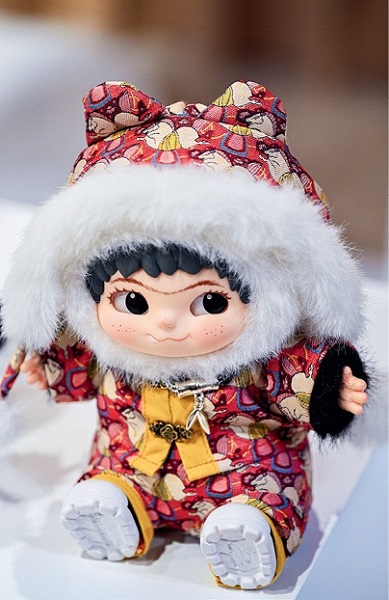
Zodiac-themed WAKUKU doll costumes for the Year of the Horse.
Expanding Commercial Opportunities
Motivated by public demand, creative design is driving traditional culture to reach wider audiences, which marks the direction of the competition. To bring ancient zodiac culture closer to modern life and young people, the competition has identified three major priorities, namely zodiac-themed trendy toys, practical daily utensils, and fashion accessories.
Award-winning designs are transformed into practical applications and manufactured goods, such as customized doll costumes launched through cooperation with fashion brand WAKUKU. The design of these costumes draws inspiration from The Gallop of Ten Thousand Horses, the first prize work from the 2026 competition. Made of silk and Song Brocade, these doll outfits have gained widespread market recognition after their release as official Beijing gifts.
In addition, the competition has also developed more than 30 cultural and creative products such as zodiac tableware, stationery, and ornaments. These products cater to domestic consumption preferences, while also serving as cultural gifts for foreign exchanges, gaining positive feedback worldwide. In this way, traditional culture becomes appreciable, functional, and widely shareable.
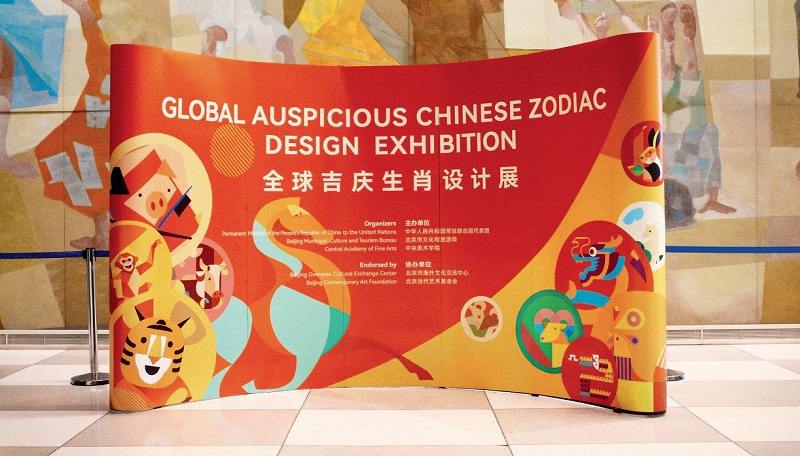
Global Auspicious Chinese Zodiac Design Exhibition held at the United Nations Headquarters in New York.
By adopting a global vision, the competition keeps expanding its international appeal and breaking down the barriers of geography and language. Over the years, it has strengthened international cultural exchanges and regularly organized overseas touring exhibitions. Exhibits have been displayed at well-known landmarks including the United Nations Headquarters, Empire State Building in New York, venue of the Brussels Light Festival, and the Sky Tower in Auckland, showcasing oriental zodiac aesthetics to a global audience.
Organizers of the competition has established long-term cooperation ties with Belgium, the United States, Mexico, France, Greece, New Zealand, Nigeria, and other countries, mobilizing international designers to collaborate on creating and exhibiting zodiac-themed artworks. Artists integrate local cultural features with Chinese zodiac culture to create innovative designs. For instance, Mexican sculptor Sebastián combined a Quetzalcoatl totem with Chinese dragon elements in the work Red Dragon, presenting cultural integration between Mesoamerican civilization and Chinese civilization. China Today used this work together with Great Wall Dragon, a winning entry in the dragon-themed design unit, as its cover image for the 2026 New Year issue. Meanwhile, Russian designer Pisklakov Pavel created Year of the Fire Horse with reference to traditional Heavenly Stems, Earthly Branches, and Five Elements theories.
Designers from across the world act as grassroots cultural ambassadors, spreading fine traditional Chinese culture through their innovative works of art. Embodying values shared across the world, zodiac culture has become a reliable resource to promote Chinese culture.
After 12 years of development, the Global Zodiac Design Competition has seen comprehensive improvement in its designs, cultural promotion, and its industrial support capacity. Going forward, it will continue to integrate global creative resources and set up a zodiac design resource archive. In addition, it will deepen cross-border cultural cooperation and boost the development of cultural and creative industries. Taking design as a connecting medium, the competition will explore the modern value of zodiac culture, boost the development of Beijing’s international cultural, tourism, and communication sectors, promote the city’s growth as an international exchange hub, and enable China’s profound zodiac culture to shine brighter on the global stage. 
WANG HAIRU is director of the Beijing Overseas Cultural Exchange Center.