Every year in early March, China holds its widely followed “two sessions,” – the annual meetings of China’s top legislature, the National People’s Congress, and the National Committee of the Chinese People’s Political Consultative Conference. These gatherings provide outsiders with valuable insight into China’s policy priorities for the year ahead. For countries like Nepal, which share not only a border but also growing ties with China, the discussions in Beijing are watched with particular attention.
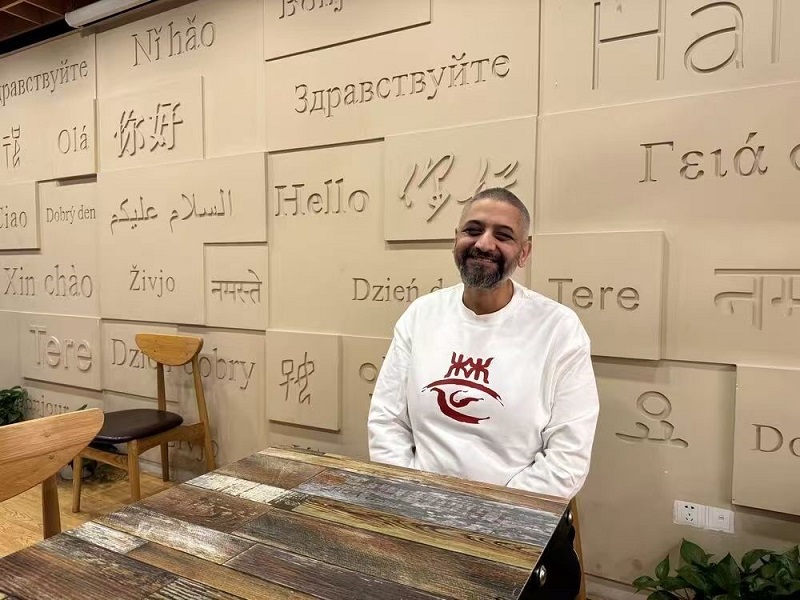
Kiran Gautam
As a Nepali publisher, who has worked closely with Chinese cultural and publishing institutions for many years, what has struck me most about China’s development in recent decades is its remarkable consistency and commitment to long-term planning.
China’s transformation has been extraordinary. In just a few decades, it has lifted hundreds of millions of people out of poverty, built vast networks of high-speed railways and highways, and become a global leader in manufacturing, technology, and innovation. Visiting cities such as Beijing, Shanghai, or Chengdu offers visible proof of the scale of this transformation — modern infrastructure, dynamic urban development, and a rapidly evolving digital economy.
However, what really impresses many observers is not only the visible development, but also the underlying philosophy driving it.
On many occasions, President Xi Jinping has stressed a point that resonates deeply with me: There is no magic pill for governance. Only through steady, sincere work — always keeping the people in mind — can one achieve political accomplishments that truly endure and earn the people’s trust.
Only in fairy tales and films, we find magic. In real life, progress comes from steady, patient work.
What struck me most about this remark is the humility behind it. Even after overseeing monumental national achievements, the leader of a global power still continues to emphasize diligence, patience, and service to the people. In many parts of the world, political language often revolves around slogans and quick promises, making this reminder that governance still requires discipline and hard work both simple and powerful.
Coincidentally, as I write this, Nepal is also going through an election period. In our political landscape, it is common to hear bold promises and confident predictions of victory. Yet governing a country is far more complicated than celebrating an electoral win. There are definitely no magic pills in politics or governance.
What truly matters is responsibility, long-term thinking, and the ability to navigate complex challenges — from economic development to foreign policy in a region that is increasingly marked by geopolitical tensions.
I have also been interested to see the strong emphasis placed on culture and reading during the “two sessions.”
For years, China has been actively promoting the concept of “National Reading.” Encouraging people to read more books and strengthening cultural literacy has been a recurring theme in government work reports during the annual “two sessions.” This broader effort to foster a reading culture includes supporting libraries, community reading programs, digital publishing, and improving book access for young people and rural communities.
As someone whose life revolves around books, translation, and publishing, I find this especially meaningful.
While infrastructure builds roads and bridges, books build minds. A society that reads widely is better equipped to innovate, think critically, and understand the world. The emphasis on a reading culture shows that development is not only about economic growth, but also about intellectual and cultural progress.
In Nepal, where a reading culture still requires stronger institutional support, there is much we can learn from such initiatives. Encouraging libraries, translation programs, and access to quality books for young readers can shape a society’s future.
This is also where cooperation between Nepal and China holds particular value.
In recent years, collaboration between the two countries has expanded beyond traditional areas such as infrastructure and trade. Cultural exchanges, education, tourism, and publishing cooperation has also seen steady growth. Through translation projects and literary exchanges, Chinese books are reaching Nepali readers, while Nepali stories are gradually gaining attention among Chinese audiences.
As a publisher involved in translation and cultural exchange, I have personally witnessed how such cooperation can create new opportunities for writers, translators, and young readers.
In the end, the discussions during China’s “two sessions” remind us that development does not happen overnight. It requires planning, discipline, and patience.
And perhaps the most important lesson is a simple one.
There are no magic pills.
Only responsibility, steady work, and the determination to build a better future, step by step.
___________
Kiran Gautam is president of Silk Road Publishers Club, Nepal.