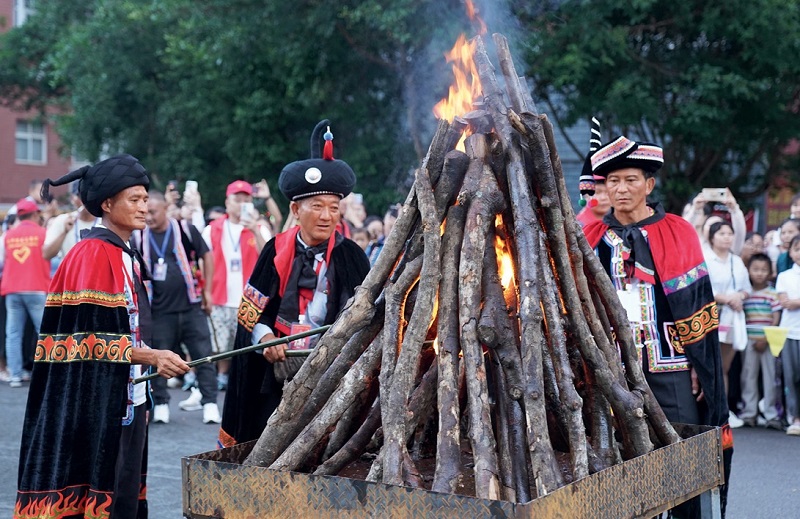
A group of Yi ethnic people dressed up in traditional clothes conduct a torch-lighting ceremony at the Torch Festival in Jinping County, Yunnan Province, on July 11, 2025.
The Torch Festival is the most significant and grandest celebration for all Yi communities across China’s Yunnan, Guizhou, and Sichuan provinces, with a history spanning over a thousand years. It reflects the Yi people’s long-standing reverence for fire.
Originating from the Yi ancestors’ worship of fire, the festival was intended to drive away pests and evil spirits, protect crops, and represent prayers for a bountiful harvest.
It also serves as a platform for showcasing Yi costumes, cuisine, music, dancing, and other distinctive cultural elements defining the Yi people’s cultural identity. In 2006, The Torch Festival of the Yi ethnic group was included in China’s first national list of intangible cultural heritage.
According to historical records, the Torch Festival began to be widely celebrated as early as the Han (206 B.C.-A.D. 220) and Tang (618-907) dynasties. These accounts also note that the Yi people’s ancestors lived in cold mountainous regions and heavily depended on and revered fire, believing that it was a divine gift.
Each year, after the busy farming season, the Yi people would gather together from the 24th to the 27th day of the sixth lunar month to hold grand fire-worship ceremonies. These rituals expressed gratitude to the god of fire and prayers for favorable weather and abundant harvests in the coming year. The celebration was usually divided into three stages: welcoming the fire, playing with fire, and sending off the fire.
During the festival, Yi villages performed rituals to honor heaven and earth, worship fire, pay homage to ancestors, and ward off misfortune. The festival was also marked by traditional singing, dancing, wrestling, and various other activities.
Today, the Yi Torch Festival has evolved from an ethnic festivity into a broad-ranging cultural event that blends folk customs, leisure activities, and cross-cultural exchange. While preserving its traditional rituals, the modern festival now highlights torch-lit carnivals, song and dance performances, competitive sports, and bustling markets. Its duration has also been extended from three days to a week or even longer.
Now celebrated across China and even internationally, the Torch Festival draws tens of thousands of visitors to southwestern China each year, offering them an immersive experience of the Yi people’s vibrant traditions and living heritage.