Since December 2025, Urumqi City and Altay Prefecture in northwest China’s Xinjiang Uygur Autonomous Region, and northeast China’s Jilin Province have both entered their snow seasons.
The snow holidays (for primary and secondary school students) in Urumqi and Altay ran from December 1 to 5. When combined with the preceding and following weekends, the holiday extended to nine days. Jilin Province also welcomed its first official ice and snow holiday from December 3 to 7.
The emergence of new “ice and snow+” economy and introduction of preferential policies covering dining, accommodation, transportation, sightseeing, shopping, and entertainment have led to a rapid year-on-year increase in bookings for tourist attractions, hotels, and air tickets. Ice and snow holidays not only provide a joyful winter break for primary and secondary school students but also, through the deep integration of culture, sports, and tourism, inject new vitality into regional development.
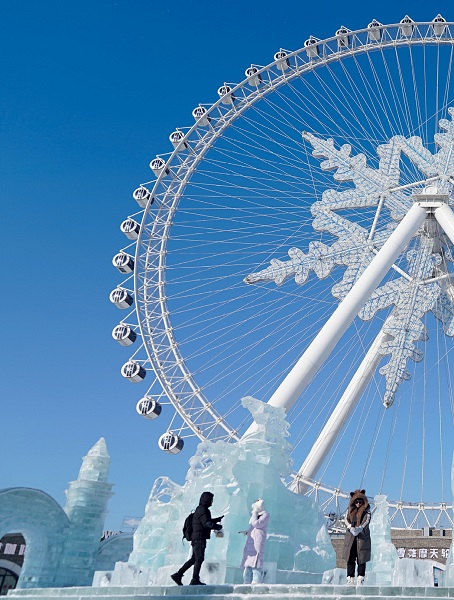
Visitors pose for photos with ice-carved horses under a Ferris wheel at the Harbin Ice and Snow World on January 5, 2026, in Harbin, Heilongjiang Province, to welcome in the Year of the Horse.
More Choices for Travelers
On the first day of the snow holiday, the Namei Valley Resort in Jilin City, central Jilin Province, was bustling with visitors. Activities such as curling, frisbee disc shooting, snow football, and skiing attracted crowds. The sound of skis gliding and the laughter of children echoed throughout the area.
The snow holidays have not only boosted interest in sports but also extended into the cultural sector.
At the Museum of the Origin of Human Skiing, located within the Altay Jiangjun Mountain International Ski Resort, students immersed themselves in exploring the origins of skiing, learning about the sport’s long history and unique charm.
During the snow holidays, museums, art galleries, libraries, and other cultural venues in Urumqi City, Altay Prefecture, and Jilin Province opened their doors to the public free of charge.
“Taking advantage of the rare opportunity provided by the snow holidays, I brought my child to visit the recently opened Jilin Provincial Modern History Exhibition, hoping to give him a deeper understanding of northeast China’s history,” said Peng Yao, a resident of Changchun City.
Wang Juan, deputy director of the Urumqi Culture, Radio, Television, and Tourism Bureau, said that the establishment of the snow holiday is an innovative practice. It leverages the city’s unique ice and snow resources to address the dual needs of enhancing education quality and promoting regional development.
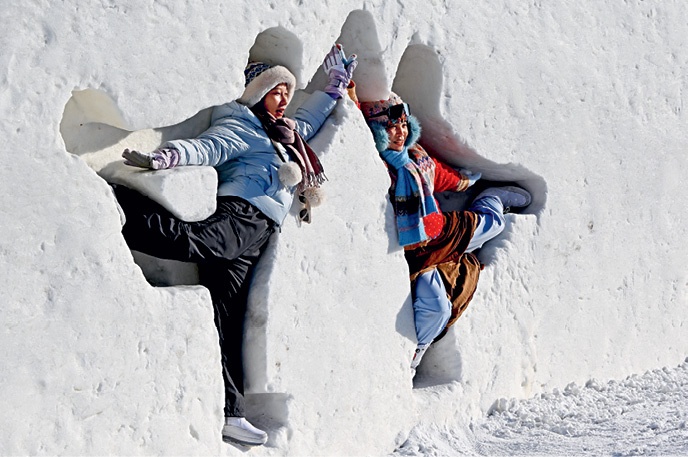
Domestic and international guests gather to witness the opening of the grand global winter event “The 42nd Harbin International Ice and Snow Festival” at the Harbin Ice and Snow World on January 5.
Economic Benefits
The economic effects of the snow holidays have become evident, stimulating consumption potential and promoting regional development.
According to data from Qunar.com, during December 3-7, 2025, the total volume of tourist attractions’ ticket bookings in Jilin Province increased by 13 percent year on year. Similarly, the total ticket bookings for Xinjiang attractions during the snow holiday period rose significantly, with a 16 percent month-on-month growth.
Urumqi City introduced a policy offering free ski passes to primary and secondary school students across Xinjiang, leading to a spike in visits to its 5S-rated ski resorts. Zhuang Hong, marketing manager of the Xinjiang Silk Road Mountain Resort, said that the resort provided free skiing lessons for students during the break, and all available slots were fully booked.
“Students’ reservations during the snow holidays have exceeded 10,000,” said Fan Lanlan, deputy manager of the Baiyun Ski Resort in Urumqi. On December 1 alone, the resort received approximately 6,200 visitors, over 3,000 of whom were primary and secondary students.
Zhong Shuru, vice dean of the School of Tourism at Xinjiang University, noted that the snow holidays avoids traditional peak travel periods like the New Year’s Day and Spring Festival, while creating a concentrated leisure period for families. This initiative establishes a new winter tourism consumption period and effectively stimulates related industries such as catering and transportation.
On the first day of the snow holidays, the hotel occupancy rate at the Changbai Mountain Huamei Resort in Jilin Province exceeded 70 percent, surpassing historical averages for the period. Lei Yanwen, marketing director of the resort, told the media that 1,468 visitors were received that day, with many bringing their children to learn skiing and enjoy hot springs.
The snow holidays provided an excellent opportunity for off-peak travel, with enthusiasm for travel running high among residents of Jilin and Xinjiang. From November 29 to December 7, 2025, flight bookings from Urumqi and Altay increased by over 40 percent month on month. Warm southern cities like Sanya and Guangzhou emerged as popular escape destinations for tourists from snow-covered Jilin and Xinjiang while southern visitors headed north for snow, forming a reciprocal consumption pattern.
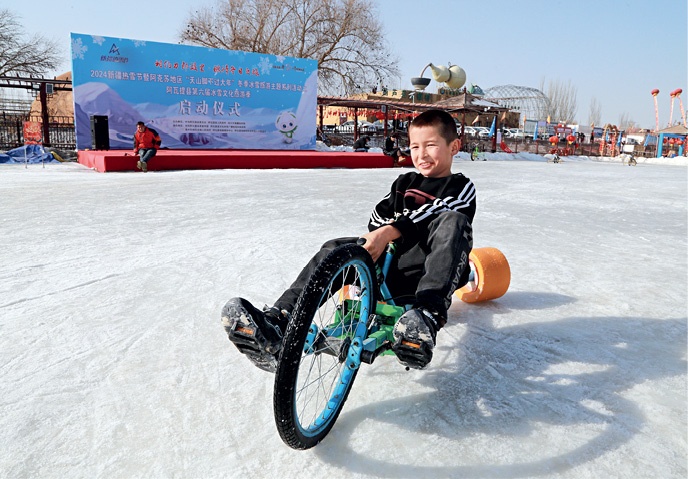
A young tourist experiences snow biking at the Daolang Town Ski Resort in Awati County, Aksu Prefecture, Xinjiang on February 2, 2025.
Policy Support
The implementation of the snow holidays relies on the collaboration of the government, schools, and families.
In Jilin Province, multiple departments jointly issued the Jilin Province 2025 Ice-Snow Break Work Plan. The plan stipulates a complete study break for all compulsory education students with no written assignments, and encourages parents to take paid leave to accompany their children. During the holiday, 36 ski resorts and three skating rinks in the province offered limited free access to young children, while 171 A-rated tourist attractions waived the first-entry ticket for primary and secondary school students. Additionally, ice-snow consumption vouchers worth RMB 100 million were issued to subsidize expenses like travel and accommodation.
In Urumqi, preferential policies were also launched, featuring diverse cultural and tourism products alongside discounts for the snow holidays. Six major ski resorts provided free skiing for all primary and secondary students in Xinjiang, homestay accommodations offered discounts as steep as 70 percent off, and the railway department added 119 temporary trains to facilitate travel for study-tour groups.
As Zhong Shuru noted, this package of policies effectively lowers the threshold for public participation in ice-snow activities. She believed that cross-department coordination and supporting systems are helping accelerate the transformation of icy resources into a booming hot economy, thereby injecting lasting momentum into regional development. 
ZHANG YU, SUN PENGCHENG, and WANG FAN are reporters at Xinhua News Agency.