The enduring spirit of perseverance, unity, and people-centered commitment embodied in the Long March continues to inspire China’s modernization, international cooperation, and vision of building a community with a shared future for humanity.
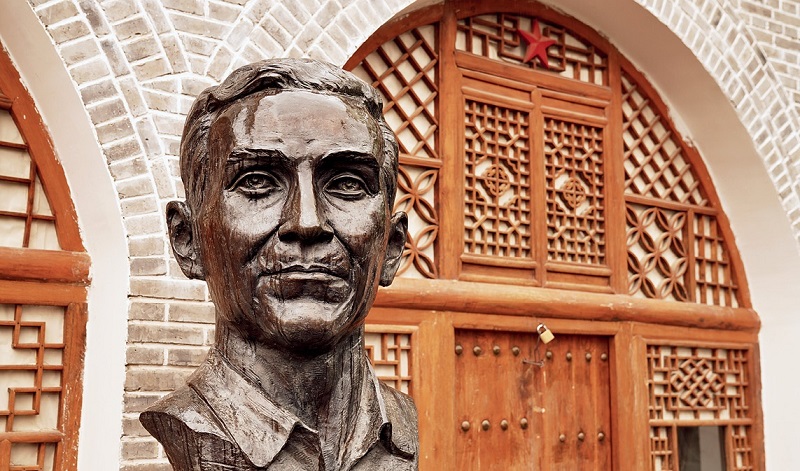
A statue of Edgar Snow is on display in front of the cave dwelling where he once stayed in Yan’an, Shaanxi Province.
As China marks the 105th anniversary of the founding of the Communist Party of China (CPC) this July, there is a renewed focus on remaining true to the Party’s original aspirations and founding mission, while carrying forward its revolutionary traditions into the new era. Against this backdrop, the story of how American journalist Edgar Snow reached China’s revolutionary heartland in 1936, takes on a new sense of relevance and vitality.
Snow did more than achieve a news reporting breakthrough: he opened a window through which the world could see, with unprecedented clarity, the true picture of the Chinese revolution, the Communist Party of China, the Red Army, and the Long March. His seminal book, Red Star Over China, published in 1937 and remains a classic today, introduced international readers to a political force then little known outside the country. It offered a rare, first-hand account of the CPC’s ideals, discipline, dedication to serving the people and saving the nation, and its profound sense of mission. In doing so, Snow helped the world understand why the Long March became so heroically epic in the history of the Chinese nation and a turning point of the country on the road to national rejuvenation.
The Long March stands as an epoch-defining feat and a monument in the history of the Chinese revolution. From 1934 to 1936, the Red Army crossed raging rivers, snow-capped mountains, and vast grasslands under extraordinarily harsh conditions, preserving its revolutionary forces and creating what has been described as a miracle in human history. Snow’s reporting gave that experience international visibility. He portrayed the Long March not as a mere relocation, but as a test of conviction, a demonstration of discipline, and a turning point that secured the future of the Chinese revolution. That understanding still resonates today – both in China, where the Long March embodies firm ideals, close ties with the people, and the courage to overcome any hardship, and internationally.
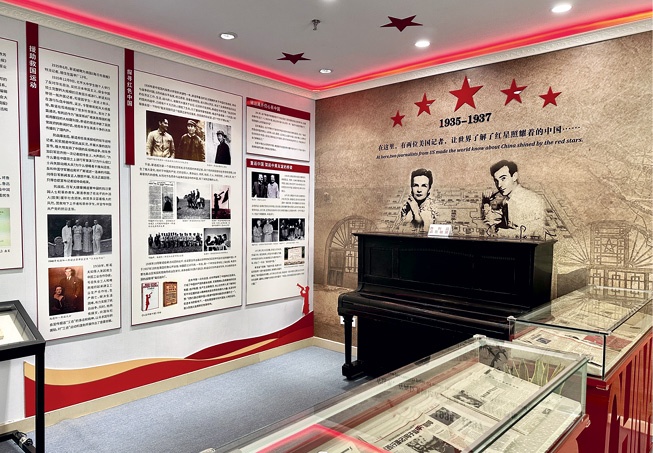
The former residence of the American journalist Edgar Snow and his wife Helen Foster Snow in Beijing’s Dongcheng District, on March 10, 2024.
The impact of Red Star Over China quickly spread far beyond China’s borders. At a time when many Western accounts portrayed the Chinese communists through a lens of suspicion or distortion, Snow offered a detailed, vivid, and objective narrative grounded in direct observation and extensive interviews, including those with Mao Zedong himself. That mattered profoundly. The book introduced the CPC to a global audience in an authentic light, showing that the CPC-led forces were committed not only to revolution, but also to national salvation and unity at a time of grave external aggression. By conveying that story to an international audience, Snow established the Long March as an event of truly global significance in the fight against fascism.
Equally important was Snow’s ability to reveal the human dimension of the revolution. He wrote about leaders and soldiers not as abstract political figures, but as individuals shaped by hardship, purpose, determination, and a shared belief in China’s future. That approach gave international readers a fuller picture of a movement that was deeply rooted in the people who were committed to their liberation. It also helped explain why the Long March holds such an enduring place in China’s historical memory: it was not merely a military maneuver, but a defining journey that forged the Party’s leadership, strengthened its ties with the people, and laid the foundation for later victories in the Chinese revolution right up to the present time.
Snow also belongs to a wider story of international friendship and solidarity. His work helped inspire greater understanding, sympathy, and support abroad for China’s revolutionary cause. It therefore stands alongside the eternal contributions of such great historical and internationalist figures as legendary foreign physicians Norman Bethune and Dwarkanath Kotnis, who came to China during the bitter hardships of wartime in support of the Chinese revolution. Snow was more than an observer: he became a lifelong, sincere friend of the Chinese people and an important bridge between China and the wider world. His reporting demonstrated how truthful, first-hand journalism could cut through prejudice and help build solidarity across borders, nationalities, and ideologies.
Nine decades later, the Long March remains a living reference point in China’s political discourse. The Long March spirit continues to be a source of strength for the new era, linking the revolutionary past to the country’s ongoing drive for modernization, national rejuvenation, and a shared future for humanity. This spirit is defined by firm ideals and convictions, fearless sacrifice, independence, seeking of truth, and unity with and reliance on the people. In that sense, commemorating the Long March is not simply about remembering a difficult but glorious chapter in history. It is about drawing practical inspiration for the challenges of development, reform and governance in a complex international environment where changes unseen in a century are unfolding at an accelerating pace.
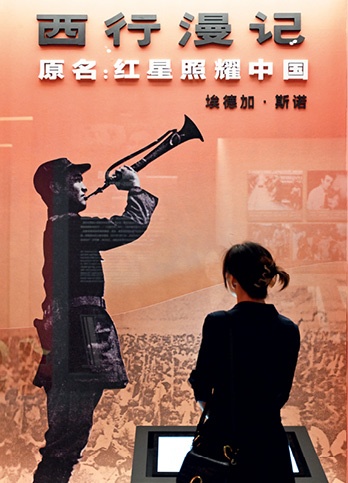
A visitor watches multimedia footage of Edgar Snow’s Red Star Over China during the “International Friends and China’s War of Resistance – Commemorative Exhibition Marking the 80th Anniversary of Victory in the Chinese People’s War of Resistance against Japanese Aggression and the World Anti-Fascist War” at the National Museum of China in Beijing, on September 9, 2025.
That continuity has been clearly visible in such fields as poverty alleviation, rural revitalization, scientific innovation, and progress in building an ecological civilization. These goals demand the same perseverance, strategic resolve, and people-centered commitment that defined the revolutionary struggle of previous generations. In this sense, the Long March spirit is not confined to the battlefields of the past. It remains a guiding force in tackling difficult and complex tasks, overcoming development bottlenecks, and pressing ahead with long-term national goals. The message is clear: just as earlier generations crossed countless rivers and mountains to secure China’s future, today’s generation needs equal determination in building a stronger, greener and more prosperous country.
The same spirit is also reflected in China’s approach to international cooperation. High-quality Belt and Road cooperation has become an important platform for promoting connectivity, shared development, and mutually beneficial collaboration. Guided by the principles of planning together, building together, and benefiting together, the Belt and Road Initiative (BRI) pursues open, green, and clean cooperation, with the goal of delivering high-standard, people-centered, and sustainable outcomes, including through “small and beautiful” projects. Alongside the BRI, the Global Development Initiative, Global Security Initiative, Global Civilization Initiative, and Global Governance Initiative all contribute to building a global community with a shared future, offering Chinese wisdom and solutions to the key problems and challenges facing humanity. In this light, the Long March spirit finds contemporary expression in China’s efforts to work with other countries, especially in the Global South, to pursue common development, strengthen exchanges and cooperation, and respond to shared global challenges.
Here, the historical and the contemporary converge. Snow helped the world understand that the Long March was not a transient episode, but a defining chapter in the rise of modern China. Today, the same spirit of perseverance, unity, and strategic resolve continues to shape the country’s path. While the context may differ, the narrative remains the same: China’s major achievements, whether in revolution, development, reform or international cooperation, are all the result of long-term commitment, collective effort, staying true to the original aspiration, and confidence in a shared future for the entire world.
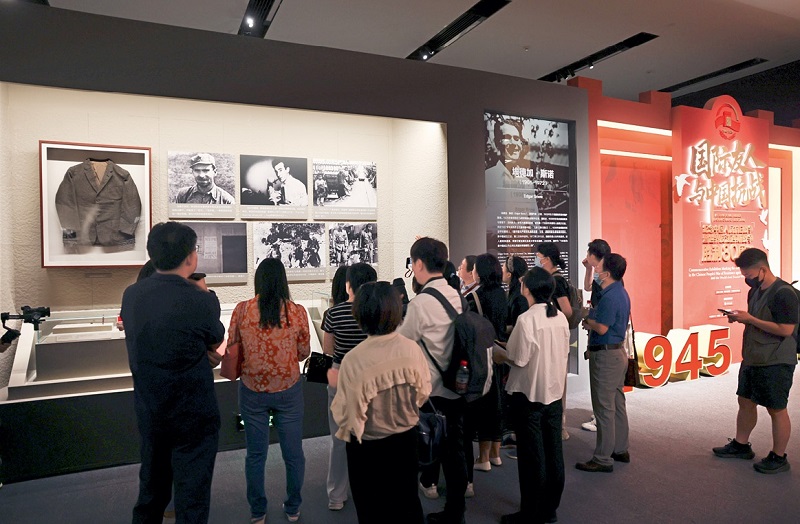
Visitors look at historical materials related to Edgar Snow’s arrival in China at the commemorative exhibition at the National Museum of China, on September 9, 2025.
Commemorating the Long March, therefore, means recognizing that its deep legacy lies in the values it forged. The Long March spirit demonstrates that no external pressure or internal challenge can stop the Chinese people and the CPC from advancing toward their goals when united in purpose. In this sense, the Long March is not only a revolutionary memory, but also a source of confidence for the new era. It resonates in connection with scientific and technological self-reliance, regional development, and the broader effort to comprehensively advance Chinese modernization on all fronts. Difficult journeys may take new forms and new directions, but the need for conviction, discipline, and perseverance remains unchanged.
Beyond journalism, Snow’s works extend to the possibility that honest engagement, careful observation, commitment to peace, and people-to-people friendships can help bridge national differences and deepen mutual understanding.
From the caves of northern Shaanxi to the discourse of high-quality development and global connectivity, the story first carried to the world by Edgar Snow continues to echo. Today, Red Star Over China did not simply record a revolution in motion; it helped reveal the ideals, heroism, and commitment that sustained it. That is why Snow still occupies an honored place in China’s historical memory. He told the world a story that still matters: that the Long March was a heroic epic, that its spirit remains vital in the new era, and that the determination forged in hardship can continue to inspire national rejuvenation and the forging of a shared future for humanity, far into the future. 
KEITH BENNETT is vice chairman of the U.K.’s 48 Group Club, co-editor of the London-based The Friends of Socialist China, and a veteran China specialist.