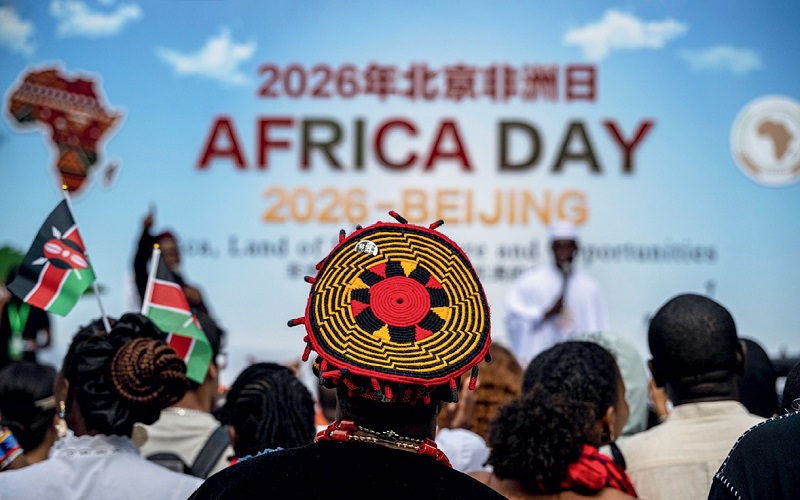
During a visit to Beijing, I found myself visiting bookshops in search of books on Africa. I wanted to see how Chinese readers encountered the continent’s history and contemporary lives through books written by Africans. However, in the shops I visited, those books were difficult to find. The search experience reminded me of a similar absence of such books I had faced decades earlier in the United States, where I had moved after leaving Ethiopia as an exiled journalist and later established TSEHAI Publishers, a press dedicated to African literature.
That recurring absence has shaped my understanding of international relations. Countries can expand trade and host business delegations, while their people remain unfamiliar with one another’s intellectual lives. How deep can mutual understanding become when so much of what we know about each other is shaped by someone else’s account?
What would our understanding of civilization become if students encountered Ethiopia’s Yaredian chant alongside Gregorian chant, and read Zera Yacob alongside Descartes and Huang Zongxi? Saint Yared belongs to the sixth-century world of Christian sacred music. Zera Yacob’s Hatata, dated to 1667, explores reason, religious belief, and ethical conduct. Read alongside René Descartes’s examination of knowledge and Huang Zongxi’s reflections on government and public responsibility, it opens a conversation among distinct intellectual traditions in Ethiopia, Europe, and China. Giving these works space in our classrooms, libraries, and translations would deepen our understanding of humanity’s shared intellectual inheritance and broaden participation in shaping its future.
As I prepare to attend the Global Governance Forum in Xiong’an, Hebei Province, this autumn, it becomes clear to me that this question is important to discussions on inter-civilizational exchange. “Harmony in diversity” and “great unity for all” – two core traditional Chinese philosophy concepts primarily rooted in Confucianism, which describe ideal social and political orders – invite us to consider the conditions under which distinct peoples can build a shared future. From an African publisher’s perspective, those conditions include the ability to contribute knowledge on our own terms.
The redistribution of global power makes this urgent. African countries are seeking greater influence over international decisions while navigating competing partnerships and expectations. Yet a world with more centers of economic power can still reproduce old inequalities in intellectual authority. The measure of realignment must include whether people gain greater capacity to define their priorities and shape the rules governing their lives.
War, climate pressures, debt, and technological disruption expose the limits of cooperation without trust. They also raise questions about whose experience counts as evidence and whose proposals receive serious consideration. A community’s ability to influence a decision begins well before its representative enters the meeting room: it depends on the institutions through which that community understands and articulates its circumstances.
Civilizational exchange can help us address this problem, provided we approach civilizations as living, internally diverse traditions. Africa’s many intellectual traditions deserve engagement in their particularity. Ethiopia alone offers rich wisdom among written scholarship, oral knowledge, religious learning, and indigenous political thought. These are resources for thinking about contemporary life, open to criticism and development.
The Confucian idea of harmony without uniformity offers a starting point. It allows us to ask how cooperation can preserve meaningful difference. I read the aspiration toward “great unity for all” as an invitation to widen our sense of responsibility: how can concern for our own community coexist with obligations toward humanity? These questions gain depth when different traditions meet without surrendering their distinct histories.
Ubuntu, a South African tradition of thought, emphasizes the relationships through which we become human. It offers an ethical challenge to arrangements that treat another people’s suffering as someone else’s concern. Shared vulnerability gives mutual responsibility practical force. A climate emergency, a displaced family, or an excluded language tests how far that responsibility actually extends.
An Ethiopian contribution can be found in the Oromo Gada traditional system of governance. In his 2018 essay “Gada and Democracy,” published in the International Journal of Ethiopian Studies, philosopher Maimire Mennasemay develops a critical interpretation of its democratic possibilities. He acknowledges historical exclusions, including those affecting women, while asking what emancipatory ideas can emerge from examining the tensions within the tradition.
Dr. Maimirey’s reading of moggaasa, a practice of incorporation or adoption, is particularly relevant. Dr. Maimirey interprets it as opening possibilities for political belonging beyond fixed ethnic boundaries, with shared obligations sustaining a larger community. This is a philosophical argument drawn from critical historical interpretation. It invites us to imagine institutions in which belonging can expand while differences remain meaningful.
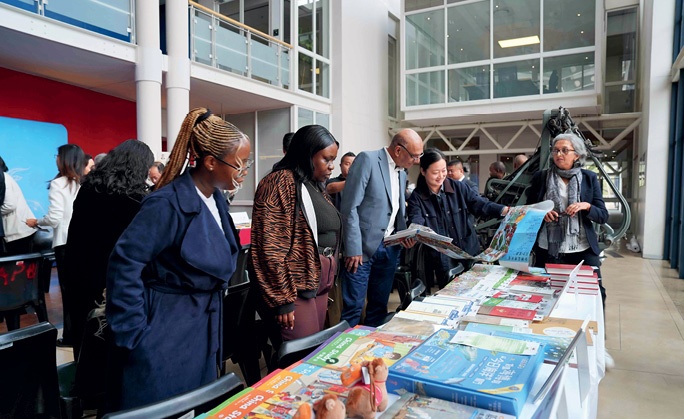
African visitors check out the books on display at the China-Africa Publications and Cultural Creative Production Overseas Touring Exhibition in Johannesburg, South Africa on September 7, 2026.
That freedom requires a material foundation. Through nearly three decades of publishing, I have learned how much work stands between an idea and a reader. An author needs editorial support; a manuscript needs production and distribution; scholarship needs journals and archives; a young reader needs an accessible book. Translation requires skilled people and sustained investment. These ordinary conditions determine which civilizations are heard.
I call the right to tell our own stories narrative sovereignty. Knowledge sovereignty extends that principle to the capacity to research, preserve, publish, teach, and debate them. It includes intellectual freedom within our societies and the ability to enter exchanges with others as capable partners. A confident knowledge culture must allow its writers to question familiar assumptions as well as external representations.
For Africa to help author global rules, African universities, publishers, libraries, and research communities need the means to sustain that work. Diplomatic representation and intellectual capacity reinforce one another. The ideas available to a negotiator, teacher, or citizen depend partly on what a society has been able to investigate, record, and make accessible.
As I argued in my recent ChinAfrica magazine article, titled “Reading One Another,” reciprocal publishing can deepen the relationship between our peoples. China–Africa publishing cooperation offers a practical setting for this ambition. Chinese readers should encounter African societies through African scholarship, literature, and children’s books. African readers should have comparable opportunities to engage with Chinese thought and contemporary experience. Reciprocal translation, joint editorial decisions, and investment in local skills can make the relationship deeper. Success should be measured by what readers can access and what participating institutions become able to do.
AI makes these questions particularly urgent. As digital systems mediate more of our reading and learning, we must ask which languages and sources inform their answers. If African knowledge is difficult to access in reliable digital form, how will it enter AI systems accurately? And how will the people who create and preserve it participate in decisions about its use?
The United Nations Global Digital Compact recognizes linguistic and cultural diversity and calls for support for representative data and local solutions. Publishers and research institutions can help give those commitments substance. Digitization should preserve context and attribution, with appropriate permissions and benefits for knowledge holders. Useful shared digital resources need stewardship, reliable materials, and people trained to maintain them.
I would welcome three practical commitments from the international discussion about global governance. First, a reciprocal translation and co-publishing program could begin with a carefully selected collection of African and Chinese works, chosen jointly by participating publishers and scholars. It should include contemporary writing alongside historical and philosophical texts, allowing readers to encounter civilizations as they continue to evolve.
Second, partnerships could strengthen the institutions that bring knowledge into public life. Training editors and translators, supporting university presses, and connecting publications with libraries would give cultural exchange continuity. A partnership should leave each participant better equipped to develop its own work and contribute to future collaboration.
Third, cities, universities, and community organizations could build shared projects around local knowledge. Students might document oral histories with community consent, scholars help interpret them, and publishers prepare editions for wider readership. Multilingual collections could then circulate through reading spaces and responsibly managed digital platforms. People whose experience rarely enters international discussion would become contributors to it.
These proposals are modest enough to begin and substantial enough to matter. They connect a forum’s aspirations to the daily work of a translator, the resources of a library, and a student’s opportunity to learn from another society. They also offer a way to judge progress after the conference has ended.
I will approach the Global Governance Forum (Xiong’an) with a publisher’s conviction that every encounter with another civilization should enlarge our capacity to understand and our willingness to listen. A shared future acquires meaning when more people possess the means to help author it. Building those means is work we can undertake together. 
ELIAS WONDIMU, Ethiopian journalist and publisher, is the founder of TSEHAI Publishers.