A German journalist, lecturer, and Beijing resident for over a decade, reflects on why the Long March is not merely a chapter of Chinese history, but a living metaphor for the nation.
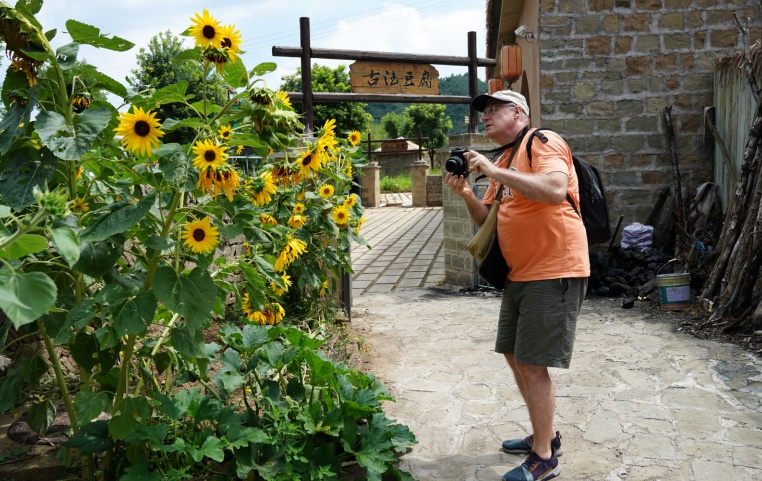
Nils Bergemann records the changes taking place in Shimen Tofu Town, Ganquan County of Yan’an City, Shaanxi Province, on July 22, 2026.
About 40 years ago, I first visited China as a child with my parents. I returned in 2011 for an extended journey across the country, and then settled down in Beijing in late 2017.
The changes China has undergone over the past decades are visible both on the ground and, figuratively speaking, from the Moon. More than 66 billion trees have been planted to reclaim land from the deserts, reduce soil erosion, and prevent sandstorms. By 2050, that number is expected to reach 100 billion. Given China’s track record of turning ambitious Five-Year Plan targets into tangible achievements, there is little doubt that the country will also achieve this goal.
In Wuqi alone, a town situated along the route of the historic Long March (1934-1936), more than 1,700 square kilometers of farmland have been converted into grassland and forests since 1998. Undeterred by the skepticism of many Western analysts, China has invested heavily in connecting even its most remote villages to a vast network of roads and railways, bringing modern infrastructure to places once considered inaccessible.
The underlying message is clear: every Chinese citizen matters, regardless of where they live. The fact that 800 million people have been lifted out of poverty over a 40-year period gives considerable weight to that conclusion.
I suspect that in Germany, Journey to the West, the classic tale of the monk Xuanzang, the Monkey King Sun Wukong, and their companions, is actually better known than the true story of China’s 12,500-kilometre Long March. Most Germans have never even heard of it.
Those who are familiar with it usually describe it as a strategic relocation during the Chinese civil war (1927-1937) [known in China as the Agrarian Revolutionary War] carried out under extraordinarily harsh conditions. While not inaccurate, this description is incomplete, overlooking the far broader significance the Long March holds in Chinese history and national consciousness.
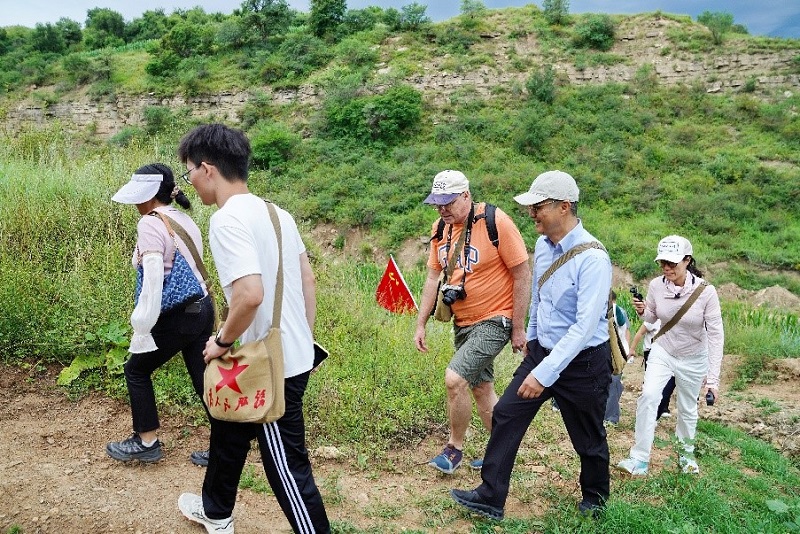
Nils Bergemann (center) visits the Long March historical trail at the Gelao Post Station in Shimen Town, Ganquan County, Yan’an, northwest China’s Shaanxi Province, on July 22, 2026, as part of the “Together on the Long March: 90th Anniversary of an Epic Journey” International Communication Project.
In Germany, history lessons often serve as a warning. In China, history is above all else a source of orientation. The Long March occupies a central place in China’s collective memory not only because of the immense hardships endured, but because it embodies a much larger story – one of sacrifice, perseverance, solidarity, determination, hope, purpose, renewal, national identity, and love of country. Shared efforts on a grand scale create a sense of meaning.
The Long March is one of history’s most compelling narratives about people who refused to give up. The quiet, relentless pursuit of long-term goals – over years, centuries, or even millennia – is deeply characteristic of Chinese civilization. This national trait may well be the most convincing explanation for China’s remarkable and peaceful rise in the 21st century. Many in the West overlook this simple explanation, perhaps because such sustained collective endeavor has become unfamiliar to them. For many of them today, humility, a willingness to sacrifice, solidarity, and a fighting spirit have become little more than forgotten words.
Over numerous generations, Chinese worked tirelessly in fields and factories for the benefit of their children and for the future of their country, knowing they might never live to see the progress themselves. Yet they were probably not as unhappy as we often imagine. They were united by a shared vision: to secure a better life for future generations and to build a strong, independent, and peaceful China that could never again be occupied by foreign powers.
This willingness to pull together without trying to outsmart one another or take shortcuts is a quality that is increasingly rare in today’s world. The combination of collectivism, individual initiative, and pragmatism appears remarkably effective. I often return to my own simple yardstick for judging good politics and good politicians: judge them by their results.
Historically, the Long March marked the moment when the Communist Party of China survived one of the greatest crises in its history, reorganized itself, and embarked on a new course. It became the starting point of a process that ultimately culminated in the founding of the People’s Republic of China in 1949.
China’s historical self-understanding follows a different path. The Long March explains not only where modern China came from, but also why resilience, solidarity, and perseverance remain deeply valued today. Importantly, the story does not end in 1936 with the completion of the Long March, nor in 1949 with the founding of the People’s Republic of China. In contemporary China, the Long March continues to serve as a metaphor for national development and collective progress.
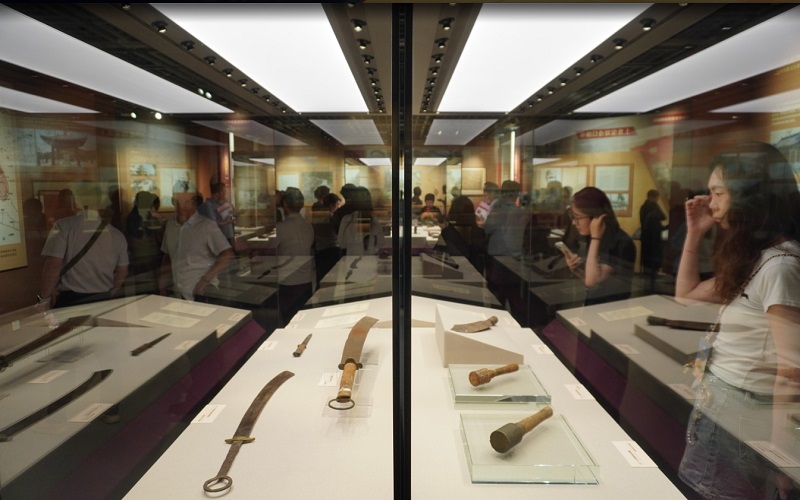
Visitors view an exhibition at the Henan Museum in Zhengzhou, north-central China’s Henan Province, on August 5, 2026. The exhibition features over 200 revolutionary relics and 500 historical photos, marking the 90th anniversary of the Long March victory.
This is why many Chinese today speak of a new Long March.
The phrase connects past, present, and future. The destination is no longer the snow-covered mountains, mighty rivers, or vast grasslands once crossed by the Red Army. Instead, the goals today are national rejuvenation, modernization, technological innovation, common prosperity, and the Chinese Dream.
Different countries are guided by different historical questions. The American Dream asks: “How can individuals build better lives for themselves?” Germany’s modern identity asks: “What must never happen again?” Chinese increasingly ask: “Where are we going together?” None of these questions are inherently superior to another; rather, each reflects a particular historical experience.
What makes the Long March unique is that it has gradually extended beyond China’s own borders, transforming the idea of collective endeavor into a global concept. President Xi Jinping has sought to express this through his vision of a “community with a shared future for humankind.” The notion that people should work together for a better future instead of fighting one another carries a powerful appeal.
The more I learn about China, the more cautious I become about rushing to judgment. Curiosity and open-mindedness should be inseparable twins. By visiting historical sites and speaking with thoughtful and well-read Chinese people, I have deepened my once rudimentary understanding of the Long March and its significance. I even had the opportunity to meet the son of one of the original marchers. It may sound strange, but after a short hike through a historically rich landscape I – a rather overweight German – felt a faint sense of the physical hardship that the march must have entailed.
Respect must come first. Only then can meaningful understanding begin. Judgments, if they are made at all, should come only after serious effort to listen and learn.
Even after eight years in China, I feel that I have only begun to understand the country and its people. My goal remains simple: to stay curious, open-minded, and willing to learn.
————————
NILS BERGEMANN is a veteran journalist who spent five years working for the China Media Group. Since 2023, he has been teaching German, Linguistics, Newspaper Journalism, and Economics at the University of International Business and Economics (UIBE) in Beijing.