As the global talent ecosystem evolves with the proliferation of AI, Chinese and European cities are exploring how mutual learning can strengthen their talent ecosystems and drive shared growth.
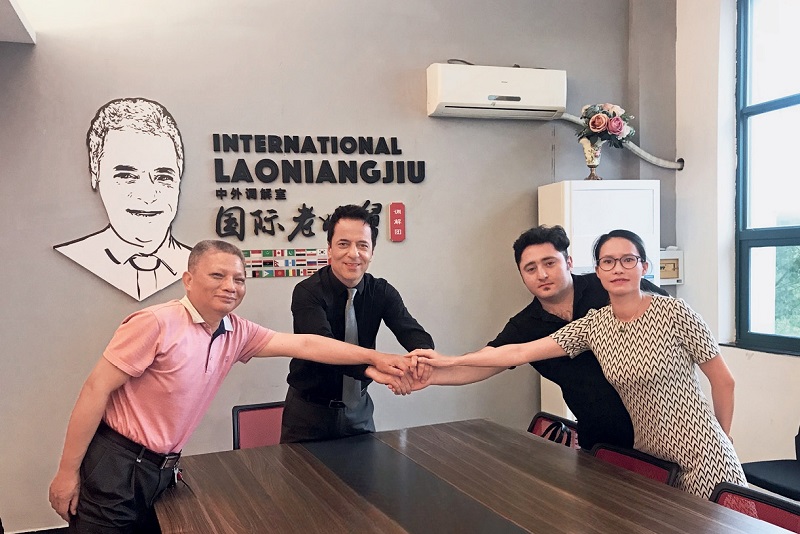
Four international residents take a group photo at the International Fusion Community in Yiwu City, Zhejiang Province on May 25, 2026.
As AI accelerates the reshaping of global industries and talent landscapes, a city’s ability to attract and retain talent has become a key measure of its global competitiveness. According to the Global City Talent Retention Index 2026, Chinese and European cities rank highly among the 130 cities assessed worldwide. Beijing, Shanghai, and Hong Kong feature in the global top 30, along with 12 cities in Europe, including London, Paris, and Amsterdam.
While China and Europe each have their own comparative advantages, promoting talent development in major Chinese and European cities and learning from each other’s experience in building talent-friendly urban ecosystems are not only necessary for overcoming their respective development obstacles, but also an important pathway toward building an open global talent ecosystem.

Six foreign young people dressed in traditional Chinese clothing take group photos in a park.
Complementary Strengths
Chinese and European cities have highly complementary strengths in skills development. Europe excels in basic research, openness, and quality of life, while China has advantages in innovation commercialization, industrial application, and real-world application scenarios. Their collaboration gives rise to a complete talent value chain that includes frontier innovation, engineering implementation, and scenario-driven iteration.
China and Europe could strengthen research collaboration and connect basic research with industrial application. The index shows that European cities have strong foundations in basic research and profound academic excellence. Cities such as Zurich, Munich, and Berlin, with leading universities and research institutions, have generated a wealth of groundbreaking research. Their Chinese counterparts, meanwhile, have superior capabilities in translating research into practical use. Beijing and Shanghai rank among the global leaders in indicators such as AI patent grants and unicorn valuation. Collaboration between Chinese and European cities could therefore create an efficient cycle of research output, technology application, and industrial scaling.
The two sides could also establish cross-border joint laboratories and R&D centers in fields such as AI and advanced manufacturing, connecting European basic research with application scenarios in China and leveraging China’s engineering capabilities to facilitate the commercialization of European technologies. This would help build a complete innovation chain from 0 to 1 and 1 to N, while promoting two-way talent movement through research cooperation.
To further attract and retain talent, joint academic publications and scholar exchanges, expansion of joint talent-training programs between universities and research institutes, and facilitation of two-way exchanges among leading research teams are some of the steps that can assist refining mechanisms.
In addition, China and Europe could establish two-way channels for talent exchange and cooperation. Cultural openness is a notable strength of European cities. London, Paris, and Amsterdam lead the world in city connectivity, freedom of travel, and the proportion of international students, making them magnets for talent from across the world. Meanwhile, Chinese cities have made steady progress in opening up to international talents in recent years, but there is still room for improvement in international talent services and the convenience of cross-border mobility.
Enhancing talent services could moreover include facilitating the grant of highly-skilled employees’ visas and residence permits, establishing overseas talent service centers and recruitment liaison offices, and developing mechanisms for mutual recognition of qualifications for high-level talent.
For young talent in particular, it is essential to increase student and scholar exchanges and international internship programs. By linking the multicultural environment of European cities with the opportunities for hands-on industrial experience in China, more robust cross-cultural platforms will help young professionals thrive.
Chinese and European cities can also jointly develop specialized industrial sectors and talent-training systems. European cities have long held strengths in advanced manufacturing, the green economy, and cultural and creative industries, while Chinese cities have rapidly developed in areas such as the digital economy, AI applications, and smart cities. This complementarity in industrial structures provides broad opportunities for joint talent development.
In this regard, joint efforts to establish talent-training systems and mutual recognition standards for professional qualifications in strategic emerging industries, as well as joint industrial training bases are needed. This can ensure closer alignment between talent development and industry requirements.
In the fast-growing AI sector, for example, China and Europe could collaborate on cultivating interdisciplinary professionals who possess both academic expertise and application skills. In the green and low-carbon sector, for example, they could share experiences in low-carbon urban development and jointly train professionals in sustainable development. In this way, industrial cooperation could drive the upgrading of talent structures.
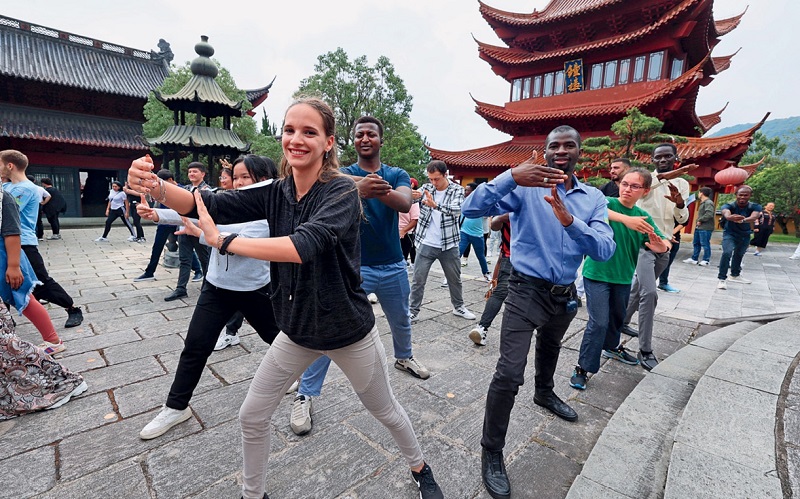
A group of international students learn how to perform Tai Chi at a Taoist temple in Jinhua City, Zhejiang Province on September 26th, 2024.
Mutual Learning
A vibrant urban ecosystem that offers a positive career outlook, ensures good quality of life, and instills a sense of belonging, lies at the core of talent retention. China and Europe each has their own strengths in areas such as ecological governance, innovation development, and public services. Mutual learning can improve their respective short links and enhance overall urban competitiveness.
China can learn from Europe’s experience in creating livable urban environments and refined urban governance, particularly the following measures:
First, improving ecological livability.
The index shows that European cities stand out in Environment and Health dimension, with Barcelona, Zurich, and Geneva in the global top 10. These cities have developed effective approaches to air-quality management, vegetation coverage, and planning for human habitation. While many cities in China have experienced rapid economic and innovation-driven growth, some still lag behind in ecological indicators. They can draw on the European experience in developing low-carbon cities, planning urban green spaces, and implementing more refined environmental governance. A good ecological environment can help retain talent in the long run.
Second, fostering greater cultural openness.
For many years, Europe has attracted global talent through their diverse and inclusive cultures and accessible public services for international residents. Chinese cities can learn from their experience in building international communities, providing multilingual public services, and promoting cross-cultural integration and exchange. This would make a city more inclusive to people from different cultural backgrounds, reduce the barriers faced by international workers in integrating into local communities, and thus further strengthen the city’s competitiveness.
Third, providing equitable social welfare services.
In Europe, their developed and equitable social wellbeing services, particularly in education and healthcare, are key to retaining a large pool of talent over the long term. China can draw on Europe’s approach to more equitable public-service provision, optimize the spatial distribution of educational and healthcare resources, and improve the quality of community-level public services. This can deliver greater security to international talents.
European cities can also learn from China’s approach to fostering innovation and attracting talent based on local strengths. Key steps include:
First, building a full-chain innovation ecosystem.
According to the index, China’s major cities have strong innovation vitality, with Beijing topping the ranks again in Innovation dimension. The city has developed an efficient innovation ecosystem including research output, patent commercialization, and unicorn development. While some European cities have strong basic research capabilities, they face challenges in commercializing research and nurturing high-growth tech firms.
In this regard, they could learn from China’s model of coordination among government, industry, universities, research institutes, and end users, while stepping up policy support for every stage from business incubation to venture capital. This would accelerate the translation of basic research into industrial value and enhance cities’ ability to attract talent through greater industrial dynamism.
Second, expanding digital infrastructure and application scenarios.
Chinese cities have moved rapidly to develop digital infrastructure, including broadband networks, creating abundant application scenarios for professionals in the digital economy. European cities could also build new digital infrastructure in areas such as smart cities and public services. This would provide technology professionals with more opportunities to realize the value of their work.
Third, adopting a city-specific approach.
Second-tier Chinese cities such as Changsha and Suzhou have leveraged their advantages: low living costs, efficient commuting, and extensive cultural and recreational amenities. Similarly, mid-sized European cities could also avoid homogeneous competition with major cities such as London and Paris. By leveraging their distinctive industries and livability advantages, these smaller cities could develop themselves into talent hubs specializing in particular fields.
China and Europe each possess distinctive strengths in attracting and retaining talent, making them natural partners for mutual learning and collaboration. This cooperation could inject new talent-driven momentum into the sustainable development of cities on both sides, while also contributing insights to global talent governance. 
This article is written by the Project Team at the Beijing Institute of Talent Development Strategy.