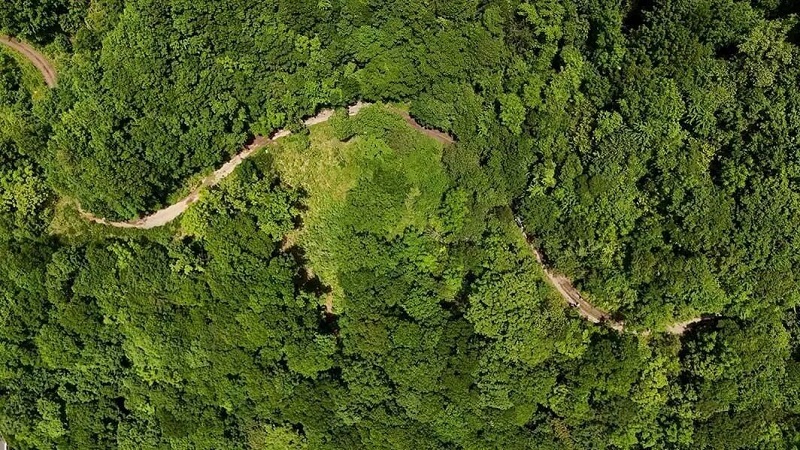
In the forest area of the Banfangzi Protection Station within the Zhouzhi National Nature Reserve in Shaanxi Province, Li Qiang, deputy director of the station, leads forest rangers through green mountains and dense woodlands on routine patrols.
As visitors enter the core zone of the nature reserve, they are first greeted by a thick canopy of towering trees. Infrared cameras installed across the woodlands stand watch around the clock, quietly capturing vivid moments of the wildlife who inhabit this wilderness: leopard cats dart through the trees in search of food, golden pheasants prance gracefully along branches, tufted deer graze peacefully on fresh grass, and a wide variety of rare wild animals roam freely along the abandoned old paths that once isolated various mountain habitats from one another.
After the Qinling Tunnel along the National Highway 108 was completed in the year 2000, the original 12-kilometer winding mountain road that crossed over the main ridge of the Qinling Mountains was completely abandoned. This marked a turning point in the restoration work of mountain forests that had long been cut off from each other. The abandoned trail unexpectedly became a natural corridor to connect populations of giant pandas and bridge theretofore fragmented ecological habitats.
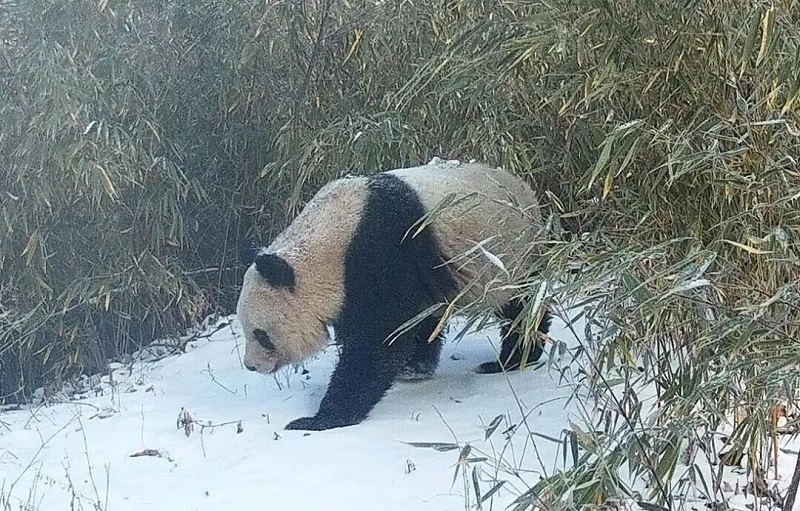
But even though the passageway was ready, attracting giant pandas to use it was quite a daunting challenge. Zhouzhi National Nature Reserve began constructing an ecological corridor back in 2016. Staff planted 46.7 hectares of Fargesia qinlingensis–giant pandas’ favorite staple food–along the abandoned roadway, while simultaneously carrying out bare slope remediation together with soil and water conservation. Thanks to years of progressive revegetation and systematic ecological restoration, the once solid paved road was gradually transformed into a lush native woodland ideal for wild animals to inhabit and breed in.
To fully guarantee the ecological security of the corridor, the nature reserve has established an integrated monitoring and management system consisting of manual patrols, aerial surveillance, and technological monitoring. A total of 49 infrared cameras have been installed across the entire corridor to enable full-coverage, round-the-clock dynamic wildlife monitoring. Forest rangers conduct regular patrols throughout the mountains to eliminate potential hazards and record traces left behind by wildlife. Such refined management provides protection for the wild animals inhabiting the Qinling Mountains.
Over the past decade, the ecological corridor project has yielded increasingly remarkable results, with tangible data bearing witness to this extraordinary ecological transformation. Back in 2015, giant panda traces on either side of the corridor were separated by 8.7 kilometers, creating massive barriers that blocked inter-population communication. Today, that gap has narrowed to merely two kilometers, and the activity ranges of the two panda groups keep merging and connecting. Fresh panda droppings were discovered by forest rangers in and around the corridor during February and May earlier this year. This is solid proof that the corridor has become a vital lifeline bridge enabling giant pandas to move freely, breed, and interact with one another.
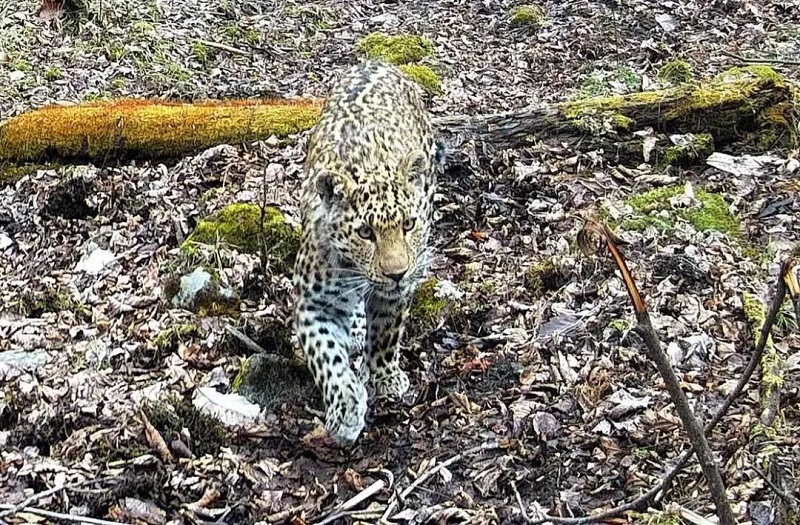
The ecological corridor benefits far more than just giant pandas, serving as a shared haven for a wealth of rare wild species native to the Qinling Mountains. Monitoring data from the forest has brought constant encouraging news in recent years: rare animals including forest musk deer and North China leopards have been frequently captured on camera. In 2024, rare footage of a mother leopard patrolling the mountains with her cubs was recorded twice at the same monitoring site within just ten days. Footage has also been taken of groups of golden snub-nosed monkeys frolicking and darting through stands of arrow bamboo, while all kinds of birds and beasts settle down, forage, and raise their young in this habitat.
Ecological conservation means not only safeguarding lucid waters and lush mountains, but also boosting local residents’ income and prosperity. Teaming up with research teams from universities, the nature reserve has mapped out the activity patterns of wild animals to scientifically optimize wildlife passages and add resting zones, steadily improving the ecological suitability of the corridor. Meanwhile, the reserve also actively engages local villagers in the protection and management of the forests, implementing ecological compensation policies, and developing eco-tourism tailored to local conditions. This enables local people to find stable jobs and grow their income without leaving their hometowns.